
In short
In 2027, tourism keeps growing but more slowly: UN Tourism now expects international arrivals to rise only 1 to 2% in 2026, and travelers are looking for value and proximity. The big 2027 trends: micro-trips, mood-driven 'off-script' travel, AI used for inspiration but not yet for decisions, and strong demand for local experiences. For professionals, the challenge is to deliver more perceived value without raising prices.
Contents
- 2027 travel trends at a glance
- 1. Slower tourism growth
- 2. More price-sensitive travelers
- 3. Proximity and alternative destinations
- 4. Micro-trips and short breaks
- 5. “Off-script” travel, driven by mood
- 6. AI for inspiration, not yet for decisions
- 7. The search for authentic local experiences
- 8. Increasingly fine segmentation
- How tourism professionals can prepare for 2027
- Where Guidly fits into these trends
- FAQ
- Conclusion: 2027, the year of perceived value
Every autumn, the big names in travel publish their forecasts for the year ahead. For 2027, reports from UN Tourism, Hilton, Booking.com and Expedia paint a consistent picture: a market that keeps growing but more slowly, travelers who watch their budget more closely, and expectations shifting towards personalisation, spontaneity and local experiences.
Travel agencies, tour operators, hoteliers, tourism offices: here are the 8 travel industry trends for 2027 you need to know, the figures behind them and, above all, what they mean for your business.
2027 travel trends at a glance
| 2027 trend | What the figures say | What it means for professionals |
|---|---|---|
| 1. Slower growth | +1 to 2% international arrivals expected in 2026 (UN Tourism) | Every client counts: focus on loyalty |
| 2. Price-sensitive travelers | Transport and accommodation costs among the top two challenges cited by experts (UN Tourism) | Raise perceived value rather than price |
| 3. Proximity and alternative destinations | Europe +3% in H1 2026, Western Europe −1% (UN Tourism) | Diversify destinations and seasons |
| 4. Micro-trips | 79% of travelers plan a one-night stay (Expedia) | Short formats that are easy to sell |
| 5. “Off-script” travel | Mood and desire drive choices (Booking.com) | Leave room for spontaneity |
| 6. AI for inspiration, not decisions | 63% trust AI tools, 22% to build an itinerary (Hilton) | Human expertise remains a selling point |
| 7. Local experiences | Only 18% trust AI to find lesser-known local experiences (Hilton) | Make the most of your content and local knowledge |
| 8. Finer segmentation | 61% of parents interested in a trip without their kids (Booking.com) | Offers designed for each traveler profile |
1. Slower tourism growth
After years of post-Covid recovery, international tourism is entering a calmer phase. According to the UN Tourism World Tourism Barometer (September 2026), the world recorded around 1.54 billion international arrivals in 2025. But in the first half of 2026, growth was just 0.4%, or 690 million international travelers.
UN Tourism has therefore revised its forecast: international arrivals are now expected to grow 1 to 2% in 2026, compared with the 3 to 4% announced in January. The reasons: the Middle East conflict (arrivals in the region down 22% in H1), oil price volatility and inflation.
What it means for you: in a slower market, winning new clients costs more. The businesses that do well in 2027 will be those that keep their travelers coming back and turn them into ambassadors.
2. More price-sensitive travelers
The experts surveyed by UN Tourism put two issues at the top of their concerns for 2026: economic factors (oil, inflation) and the high cost of transport and accommodation. The organisation is clear: travelers will keep looking for value for money and travelling closer to home.
What it means for you: cutting prices isn’t always possible. The alternative is to raise the perceived value of the trip: included services that cost the agency little but that travelers notice and feel on the ground (personal advice, exclusive content, audio guide, support). That is what justifies a price and makes the difference against a simple online booking.
3. Proximity and alternative destinations
The first half of 2026 shows a shift in flows. Europe, the world’s largest tourism region, welcomed nearly 350 million international travelers (+3%). Southern Mediterranean Europe and Central and Eastern Europe grew 4%, while Western Europe fell 1%, with a 6% drop in June linked in part to a heatwave.
UN Tourism also notes that instability has shifted part of the demand towards nearby, more accessible destinations.
What it means for you: 2027 is a good year to broaden your catalogue with less obvious destinations and to develop the shoulder seasons, when extreme heat makes summer less appealing in some cities. For inspiration, see our selection of cheap places to travel in Europe in 2027.
4. Micro-trips and short breaks
Expedia’s Unpack ‘27 report, based on a survey of 26,000 travelers in 16 countries, highlights “flash” getaways. According to Euronews (in French), 79% of travelers plan at least one one-night stay in the coming year, and searches for one-night stays rose 10% on Hotels.com.
What it means for you: short formats (weekends, city breaks, 24- to 48-hour themed trips) are easier to decide on and to sell in uncertain times. On a short trip, every hour counts: travelers want to see the essentials without wasting time getting organised.
5. “Off-script” travel, driven by mood
Booking.com’s 2027 Travel Predictions, based on a survey of 28,230 travelers in 32 countries and territories (July–August 2026), sum up the year in one idea: going off-script. Travelers increasingly choose according to their mood, their desires of the moment and their budget, and look for unexpected experiences.
What it means for you: itineraries planned down to the hour are less appealing. The trips that work in 2027 will leave room for freedom… as long as travelers have what they need to make the most of it. We explain how in our article on free time on group tours.
6. AI for inspiration, not yet for decisions
Artificial intelligence is now part of the traveler journey, but trust has its limits. According to Hilton’s 2027 Trends Report, carried out with Morning Consult in May–June 2026:
- 63% of travelers trust AI tools when making travel decisions;
- 70% trust hotel staff as a planning resource;
- only 22% trust AI to create an itinerary tailored to their interests, and 20% to recommend a restaurant or bar.
What it means for you: AI doesn’t replace professional expertise; it makes it more valuable. The 2027 opportunity is to use AI under your brand and based on your content: travelers get the personalisation and availability of AI, backed by your know-how. To go further, read how AI is changing the traveler experience.
7. The search for authentic local experiences
This is the most telling figure in the Hilton report: only 18% of travelers trust AI to help them discover lesser-known local experiences. In other words, what travelers want most (authenticity, off the beaten track) is also what they struggle most to find on their own.
What it means for you: your local knowledge is an asset. The addresses, neighbourhoods and stories you know are worth more than ever, as long as travelers can access them when they are on site, not just in a brochure. Tourism offices have understood this, as we explained in why tourism offices need to reinvent the audio guide.
8. Increasingly fine segmentation
The 2027 reports show travelers with very different expectations depending on their profile. According to Booking.com, 61% of parents surveyed are interested in a trip without their children. At the same time, Expedia sees a “back to childhood” trend: 57% of travelers say they would be likely to book this kind of trip in 2027.
What it means for you: one itinerary no longer speaks to everyone. In 2027, personalisation is no longer a bonus: content tailored to families, couples, architecture or food lovers, and in each traveler’s language.
How tourism professionals can prepare for 2027
All 8 trends point to the same conclusion: in 2027, you will need to deliver more value, more personalisation and more freedom, without raising costs. A few practical steps:
- Audit your offers: which services are actually visible during the trip, and which are forgotten once the travel documents are handed over?
- Develop short formats and alternative destinations, especially off-season.
- Leave free time in your itineraries, and equip your travelers to enjoy it.
- Put AI at the service of your expertise, rather than leaving it to consumer tools that know neither your clients nor your destinations.
- Personalise by profile and language, without multiplying content production.
Where Guidly fits into these trends
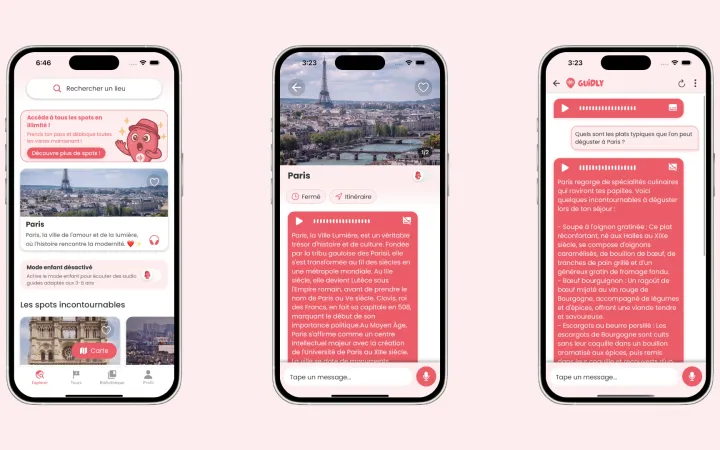
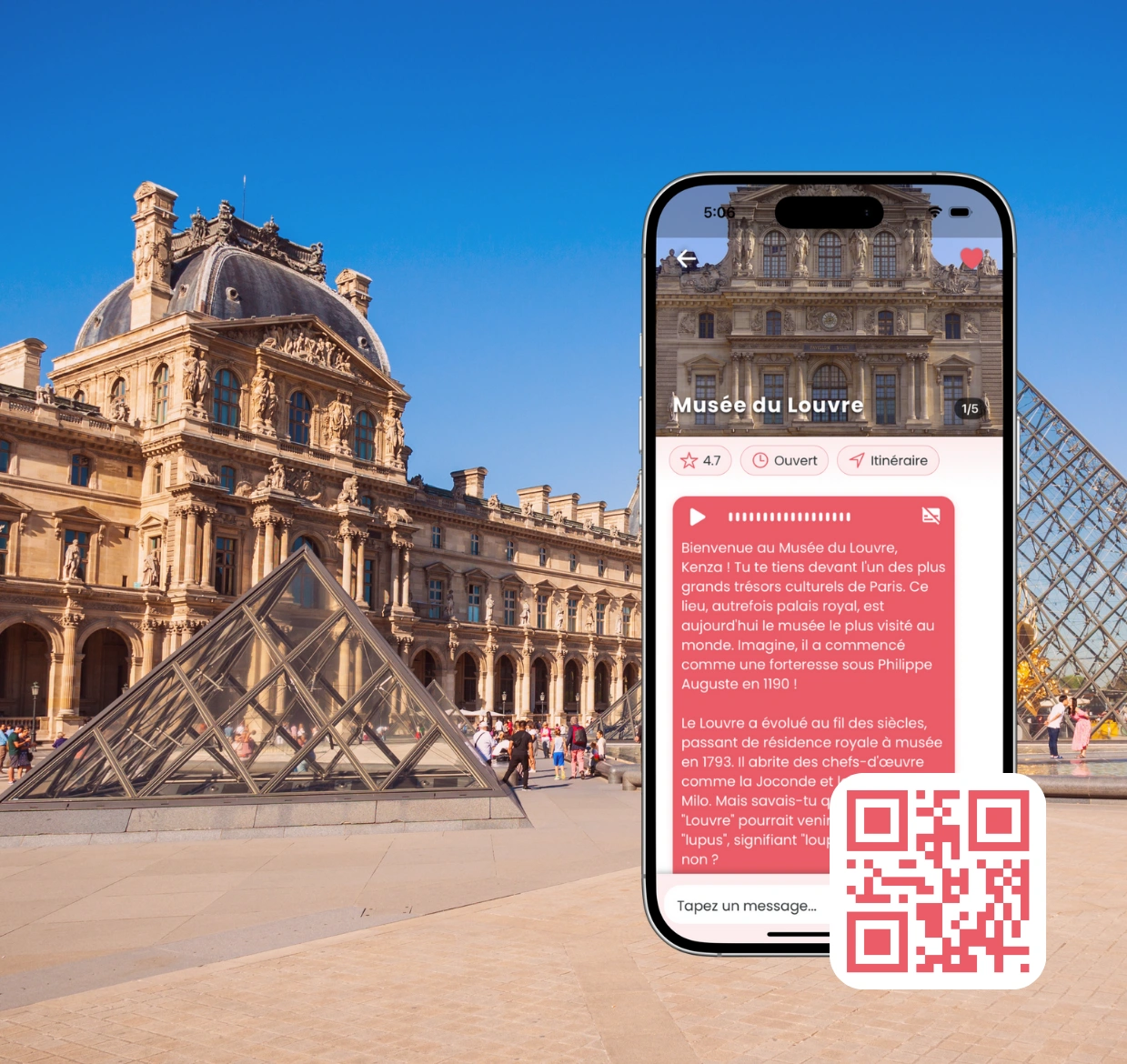
Guidly is an AI-powered personal audio guide that agencies, tour operators, hotels and tourism offices offer or resell to their travelers. It directly addresses several 2027 trends:
- Perceived value without logistics: a voucher in the travel documents, no equipment to manage.
- Freedom and off-script travel: travelers explore at their own pace, and the tour adapts to what they want.
- AI under your brand: your itineraries and logo in the app, enriched with an audio guide that answers questions.
- Personalisation: more than 12 languages, more than 190 countries, tours tailored to each traveler’s interests.
FAQ
What are the main travel industry trends for 2027?
The main 2027 travel trends are slower growth, price-sensitive travelers, the rise of micro-trips, mood-driven “off-script” travel, AI used for inspiration but not yet for decisions, the search for authentic local experiences and finer segmentation of travelers.
Will tourism keep growing in 2027?
Yes, but more slowly. UN Tourism expects international arrivals to grow 1 to 2% in 2026, compared with the 3 to 4% forecast at the start of the year, because of the Middle East conflict, oil prices and inflation.
Do travelers trust AI to plan their trips?
Partly. According to Hilton, 63% of travelers trust AI tools when making travel decisions, but only 22% trust AI to build a personalised itinerary and 18% to find lesser-known local experiences.
How can a travel agency adapt to 2027 trends?
By raising the perceived value of its trips without raising prices: short formats, alternative destinations, well-supported free time, personalised content and AI tools used under its own brand.
What is a micro-trip?
A micro-trip is a very short trip, often a single night or a weekend. According to Expedia, 79% of travelers plan at least one one-night stay in the coming year.
Conclusion: 2027, the year of perceived value
2027 won’t be a year of volume, but of value. Travelers keep travelling, but they choose more carefully, expect more personalisation and want to keep their freedom. For tourism professionals, that is an opportunity: those who can enrich the on-site experience, without complexity or extra cost, will stand out.
👉 Planning your 2027 season? Book a 30-minute demo to see how Guidly can enrich your trips, with no logistics.
Discover Guidly for tourism professionals: partner dashboard, vouchers and API for agencies, tour operators, cruise lines, hotels and tourism offices.
Sources: UN Tourism, World Tourism Barometer, September 2026 · Hilton, 2027 Trends Report, September 2026 · Booking.com, Travel Predictions 2027, October 2026 · Expedia Group, Unpack ‘27, via Euronews (in French), October 2026.