In short
The best Christmas markets in Europe in 2026: Strasbourg (from 27 November), Colmar (23 November – 29 December), Nuremberg (27 November – 24 December), Vienna (13 November – 26 December at Rathausplatz), Prague, Brussels (27 November – 3 January), Dresden, Cologne, Budapest, Copenhagen, Tallinn and Basel. To travel after Christmas, pick Prague, Brussels, Tallinn or Copenhagen, which stay open until early January.
Contents
Mulled wine, wooden chalets, twinkling lights and the smell of gingerbread: every winter, Christmas markets transform Europe’s historic centres. Some have been running for centuries, like Dresden’s Striezelmarkt or Strasbourg’s Christkindelsmärik.
Here’s our pick of the 12 best Christmas markets in Europe for 2026, with their dates. We checked them in October 2026 on official websites where available; some may still change, so confirm before you book.
2026 dates at a glance
| City | 2026 dates |
|---|---|
| Strasbourg | From 27 November until Christmas |
| Colmar | 23 November – 29 December |
| Nuremberg | 27 November – 24 December |
| Dresden | 25 November – 24 December (Striezelmarkt) |
| Cologne | From 16 November to 23 December (cathedral market, provisional dates) |
| Vienna | 13 November – 26 December (Rathausplatz); Schönbrunn until 6 January |
| Prague | 28 November – 6 January (announced) |
| Budapest | Mid-November – late December (to be confirmed) |
| Brussels | 27 November – 3 January |
| Copenhagen | 13 November – 3 January (Tivoli, closed 24 December) |
| Tallinn | 20 November – 6 January |
| Basel | 26 November – 23 December |
🇫🇷 Strasbourg, the “Capital of Christmas”
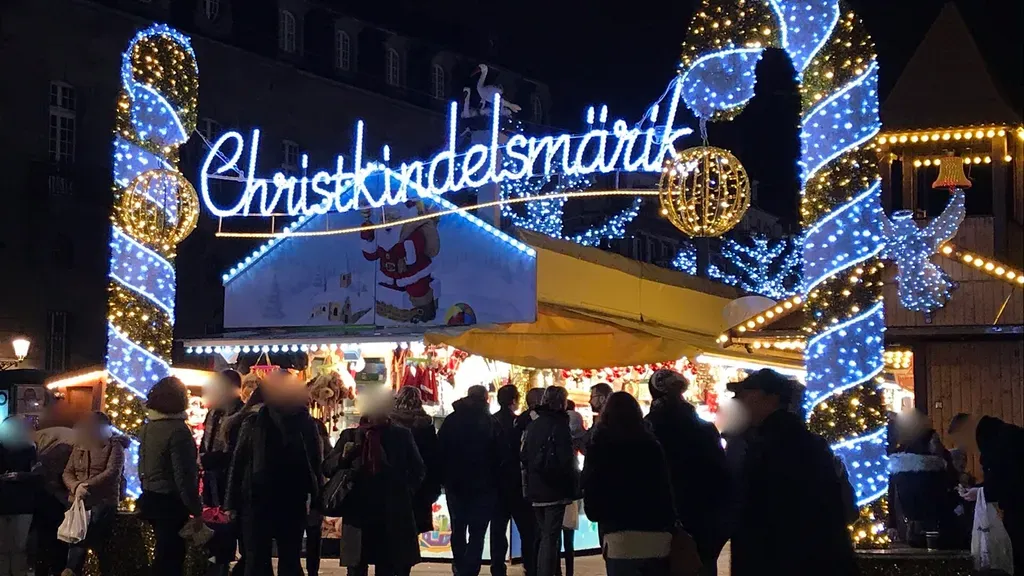 Photo: Romynine, CC BY-SA 4.0, via Wikimedia Commons
Strasbourg’s Christkindelsmärik, on Place Broglie, is one of the oldest Christmas markets in Europe. Today the city has several, spread across the centre: Place Broglie, Place Kléber at the foot of the giant tree, around the cathedral, and in La Petite France. A light trail links the neighbourhoods.
2026 dates: opens Friday 27 November; the market traditionally closes on 24 December.
Our tip: go on a weekday, as weekends are packed. Take the chance to explore the city, one of the most beautiful cities in Europe.
🇫🇷 Colmar
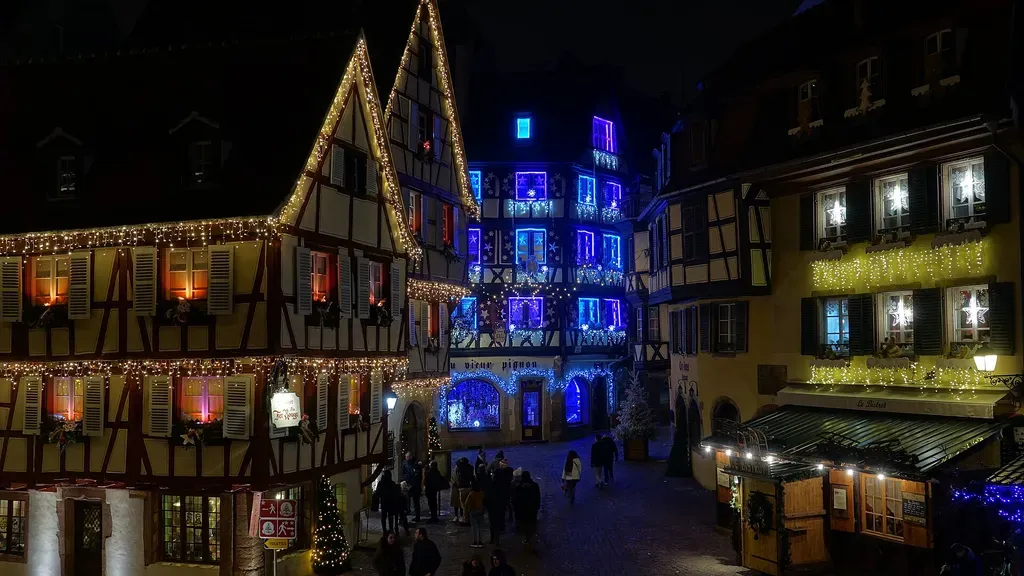 Photo: Gzen92, CC BY-SA 4.0, via Wikimedia Commons
Half an hour by train from Strasbourg, Colmar sets up its markets in an old town of half-timbered houses, all the way to the Little Venice quarter. Smaller and more intimate than Strasbourg, it’s one of the most magical markets in France.
2026 dates: 23 November to 29 December.
🇩🇪 Nuremberg
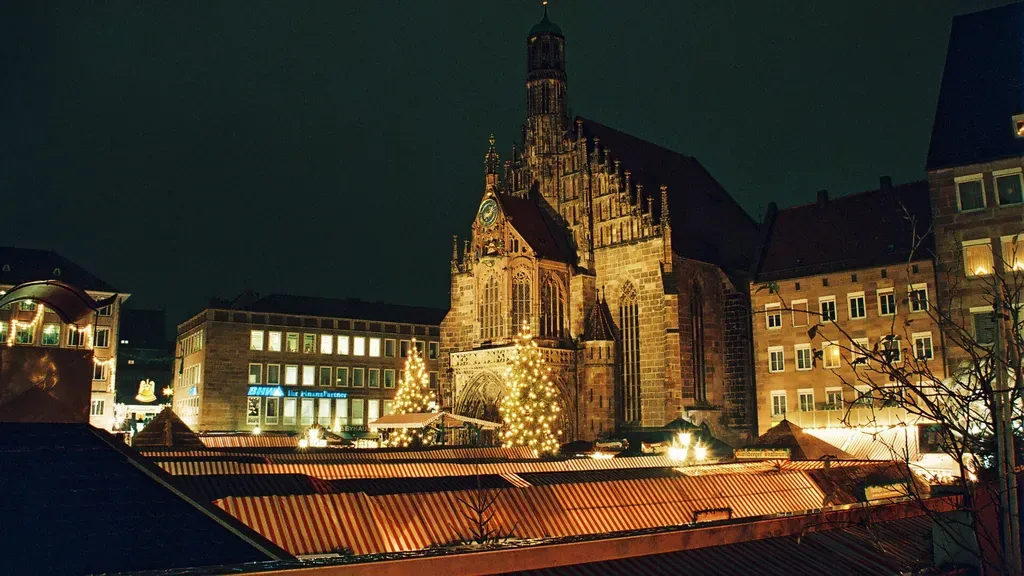 Photo: Magnus Gertkemper, CC BY-SA 2.0 de, via Wikimedia Commons
Nuremberg’s Christkindlesmarkt, on the Hauptmarkt, is one of the most famous in Germany. Try the little Nuremberg sausages and Lebkuchen, the local gingerbread. The opening is marked by the Christkind’s prologue, read from the balcony of the Church of Our Lady.
2026 dates: 27 November to 24 December, daily 10am to 9pm (until 2pm on 24 December).
🇩🇪 Dresden
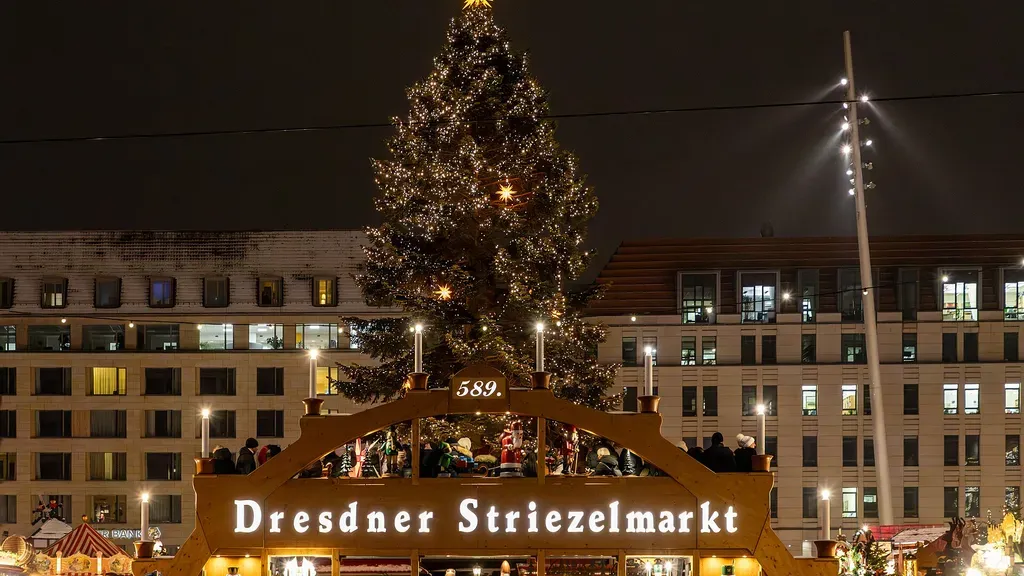 Photo: Dietmar Rabich, CC BY-SA 4.0, via Wikimedia Commons
Dresden’s Striezelmarkt, on the Altmarkt, claims to be Germany’s oldest Christmas market. It’s named after the Striezel, the forerunner of Stollen, the fruit bread eaten at Christmas. The city has several other markets, including a medieval one.
2026 dates: Striezelmarkt from 25 November to 24 December.
🇩🇪 Cologne
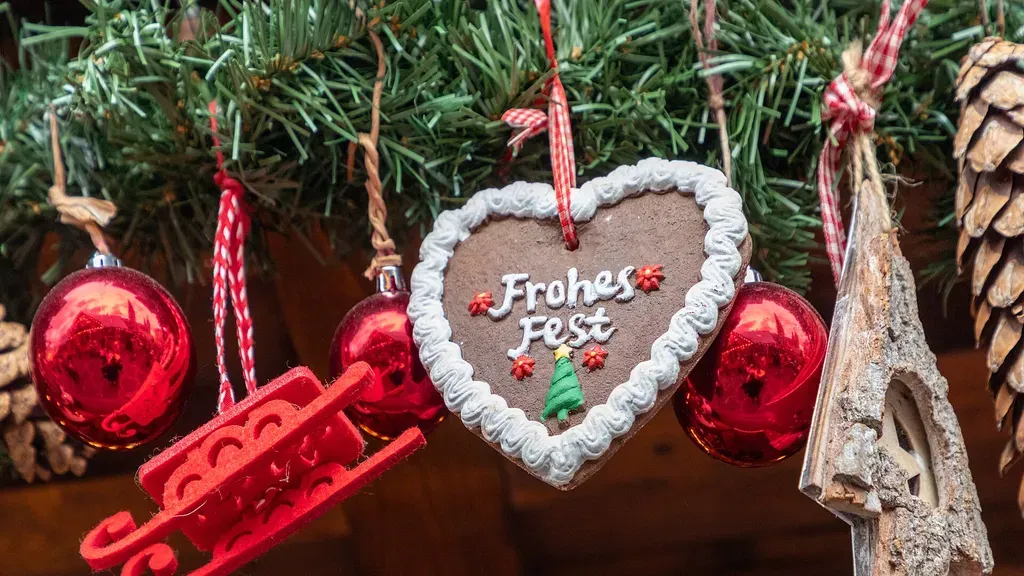 Photo: Dietmar Rabich, CC BY-SA 4.0, via Wikimedia Commons
At the foot of the Gothic cathedral, Cologne’s Christmas market and its giant tree make one of the most impressive settings in Europe. The city has several markets, including Heinzels Wintermärchen in the old town.
2026 dates: from 16 November to 23 December for the cathedral market (dates announced as provisional).
🇦🇹 Vienna
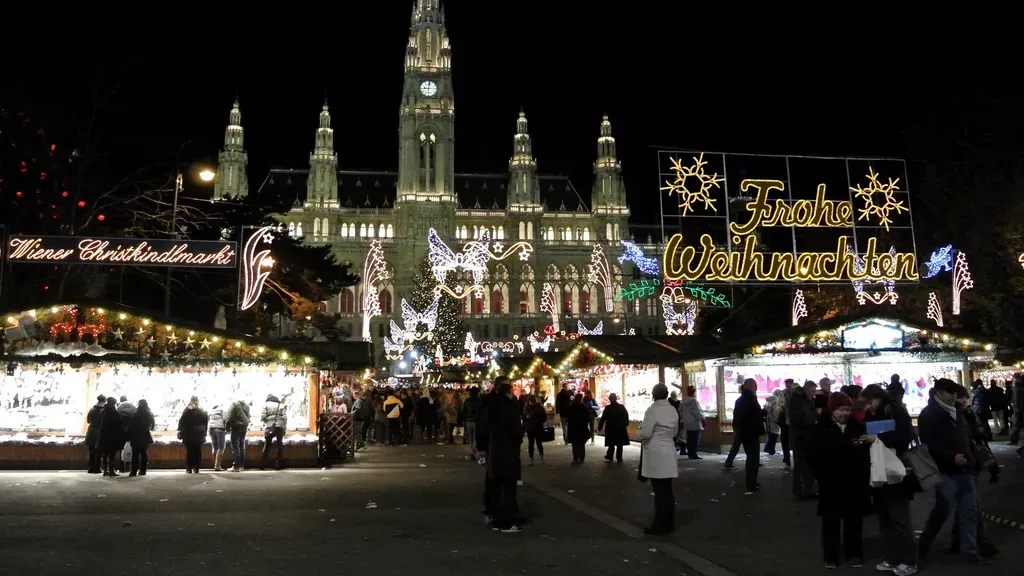 Photo: Pavel.Shulekin, CC BY 3.0, via Wikimedia Commons
Vienna has around ten Christmas markets. The largest sets up in front of City Hall, on Rathausplatz; the most elegant are at Schönbrunn and Belvedere palaces; the most authentic is probably Spittelberg, in the lanes of a Biedermeier quarter.
2026 dates: Rathausplatz 13 November to 26 December; Schönbrunn 6 November to 6 January 2027; Belvedere 20 November to 31 December; Spittelberg 13 November to 23 December.
Also read: Vienna in 3 days.
🇨🇿 Prague
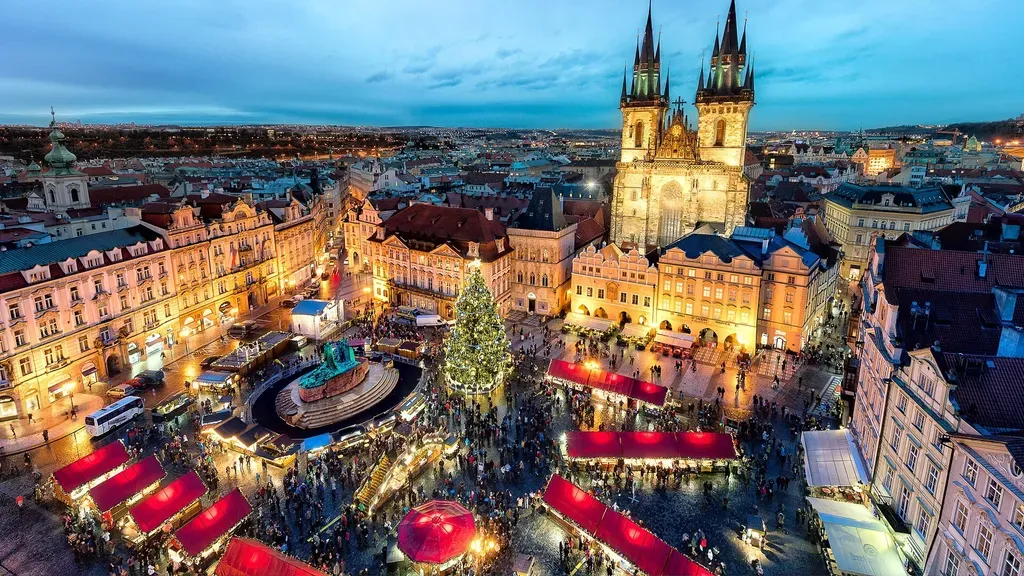
On Old Town Square, the giant tree and chalets stand opposite the Church of Our Lady before Týn and the astronomical clock: one of the most spectacular Christmas settings in Europe. A second large market sets up on Wenceslas Square.
2026 dates: 28 November to 6 January 2027 according to announced dates, to be confirmed.
Also read: Prague in 3 days.
🇭🇺 Budapest
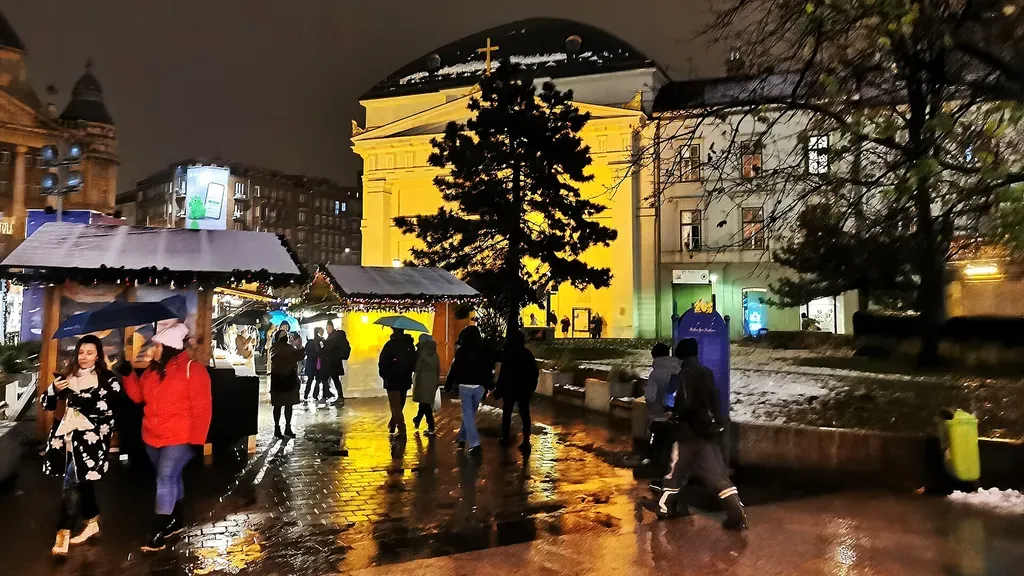 Photo: Elekes Andor, CC BY 4.0, via Wikimedia Commons
Budapest’s two big markets set up in front of St Stephen’s Basilica, with a light show projected onto its façade, and on Vörösmarty Square. Try kürtőskalács, a chimney cake baked on a spit and rolled in sugar.
2026 dates: expected to open in mid-November and run until the end of the year; check exact dates on the official website.
Also read: Budapest in 3 days.
🇧🇪 Brussels
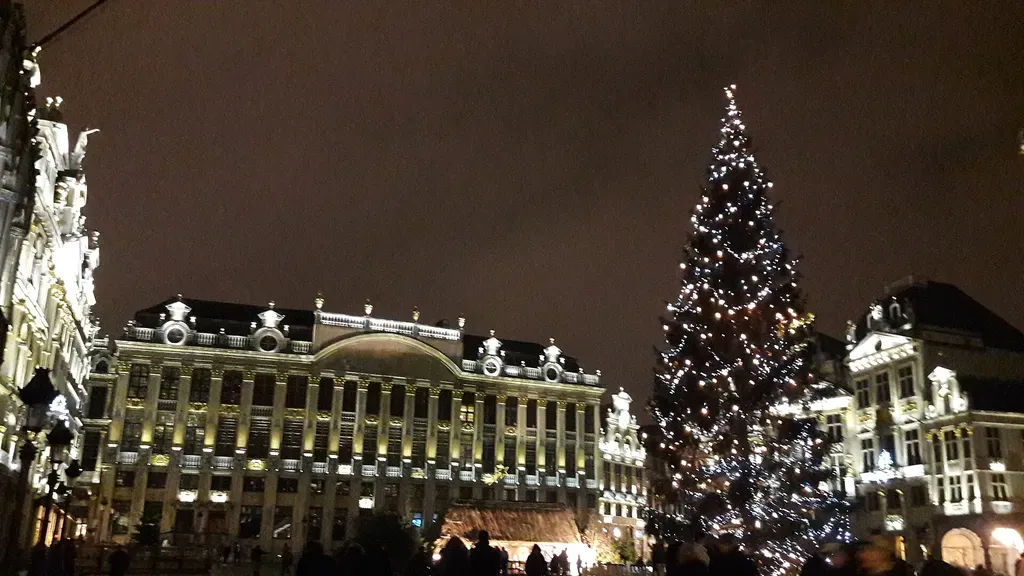 Photo: Pjposullivan1, CC BY-SA 2.0, via Wikimedia Commons
Winter Wonders stretches from the Bourse to the Marché aux Poissons, with a Ferris wheel and an ice rink. On the Grand-Place, a giant tree and a sound-and-light show light up the evenings.
2026 dates: 27 November 2026 to 3 January 2027, daily 12pm to 10pm (closing at 6pm on 24 and 31 December and 3 January).
🇩🇰 Copenhagen
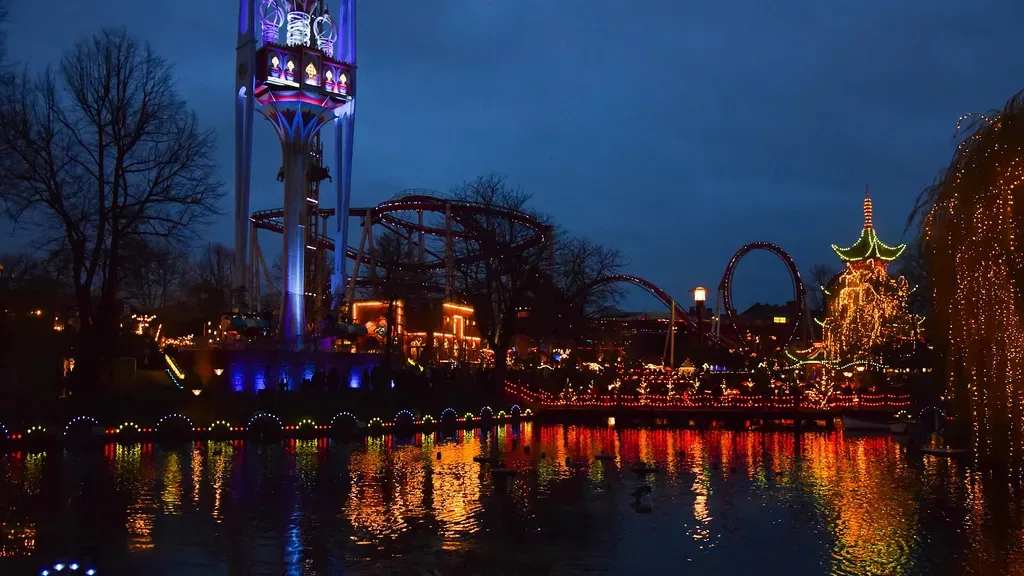 Photo: Maria Eklind, CC BY-SA 2.0, via Wikimedia Commons
In Copenhagen, Christmas is all about Tivoli Gardens, one of the oldest amusement parks in the world, lit up with thousands of lights. The city also has street markets, including in Nyhavn.
2026 dates: Tivoli from 13 November 2026 to 3 January 2027 (closed 24 December).
🇪🇪 Tallinn
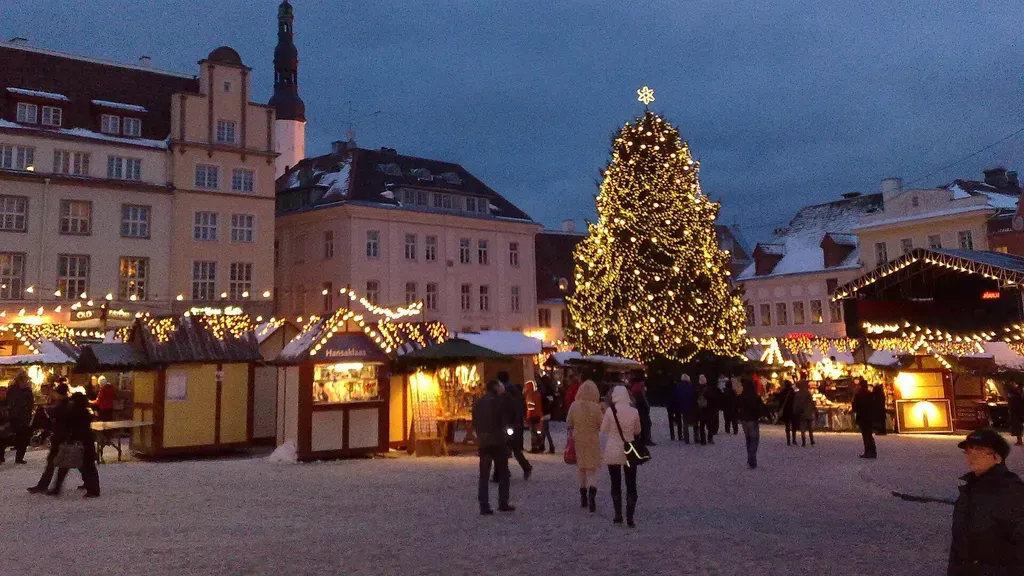 Photo: Marit & Toomas Hinnosaar, CC BY 2.0, via Wikimedia Commons
In Tallinn’s UNESCO-listed medieval old town, the market sets up on Town Hall Square around a large tree. The city claims one of the first public Christmas trees in history, in the 15th century.
2026 dates: 20 November 2026 to 6 January 2027.
🇨🇭 Basel
Basel’s Christmas markets, on Barfüsserplatz and Münsterplatz, are among the most beautiful in Switzerland. The city is less than an hour by train from Colmar, so you can combine the two.
2026 dates: 26 November to 23 December.
Our tips for enjoying Christmas markets
- Go on a weekday: on December weekends, the best-known markets are packed.
- Book early: in Strasbourg, Colmar or Vienna, hotels fill up months in advance.
- After Christmas, many German and Alsatian markets close on 23 or 24 December. Prague, Brussels, Tallinn, Copenhagen and Schönbrunn in Vienna stay open until early January.
- Keep your mug: at many markets, mulled wine comes in a mug with a deposit, which you can return or keep as a souvenir.
- Wrap up warm: you’ll spend a lot of time outdoors, often in sub-zero temperatures in central and northern Europe.
Between the stalls, discover the city’s story
Christmas markets set up in the heart of historic centres. With Guidly, your phone tells you the story of the churches, squares and houses around them, in your language and based on your interests. You can ask it questions, and kids mode (ages 3–8) brings the whole family along. Our tips are in our guide on how to explore a city without a guide.
Cover photo: Victor Porof, CC BY-SA 3.0, via Wikimedia Commons
FAQ
What is the best Christmas market in Europe?
Strasbourg, Colmar, Vienna, Prague and Nuremberg are the most often cited. For a medieval atmosphere, Tallinn and Dresden are also outstanding.
When do Christmas markets open in 2026?
Most open between mid and late November: from 13 November in Vienna and Copenhagen, 23 November in Colmar, and 27 November in Strasbourg, Nuremberg and Brussels.
Which Christmas markets are open after Christmas?
Brussels (until 3 January 2027), Prague and Tallinn (until 6 January), Copenhagen (Tivoli, until 3 January), Colmar (until 29 December) and the Schönbrunn Palace market in Vienna (until 6 January).
Which Christmas markets are easy to reach by train?
Strasbourg is under 2 hours from Paris by high-speed train, and Brussels about 1 hour 30 minutes. From Strasbourg, Colmar is half an hour away and Basel about an hour and a quarter, so you can visit several markets in one trip.